How SIP Trunk Technology and Global IP Partners Future-Proof Your Business Communication
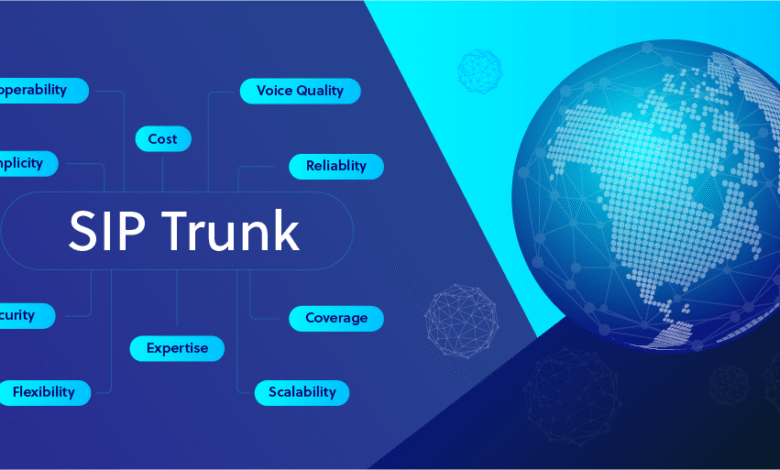
For Indian MSMEs looking to grow beyond borders, communication infrastructure can either be a competitive advantage or a persistent bottleneck. Traditional phone lines are rigid, expensive, and difficult to scale.
That is where modern solutions like SIP trunk technology and global IP partnerships come in, offering a smarter, more agile approach to voice communication.
What Is a SIP Trunk and Why Does It Matter?
A SIP trunk, or Session Initiation Protocol trunk, replaces conventional telephone lines by transmitting voice calls over an internet connection. Instead of investing in physical hardware such as E1 lines or analogue trunk cards, businesses can manage calls digitally through their existing IP infrastructure.
For MSMEs, this is a significant shift. It removes the need for costly hardware upgrades, reduces annual maintenance costs, and allows voice capacity to be adjusted based on actual call volumes. Whether your business is scaling up during peak seasons or consolidating during slower periods, a SIP trunk gives you that flexibility without added complexity.
Key Advantages of SIP Trunking for MSMEs
Vi Business SIP Trunking, for instance, offers features purpose-built for growing businesses. These include Direct Inward Dialling (DID) and Direct Outward Dialling (DOD), multiple pilot numbers on a single trunk, national number pooling for cost savings, and a geo-redundant architecture that ensures high uptime. The solution also supports multiple codecs and includes multi-layered security to guard against fraudulent calls and DDoS attacks.
Businesses also benefit from a pay-as-you-use model, which means you are not locked into paying for capacity you do not need. The option of a fully managed service further reduces the burden on in-house IT teams.
The Role of Global IP Partners in Cross-Border Communication
As Indian MSMEs expand their operations internationally, the ability to connect with overseas customers and partners becomes critical. This is where global IP partners play a decisive role.
Global IP Trunking (GIPT) enables businesses to reach international customers through local fixed-line numbers or international toll-free numbers in their respective countries, without having to establish a physical office abroad. It is a cost-effective way to build a credible, localised presence in global markets.
What Global IP Trunking Brings to the Table
Vi Business Global IP Trunking (GIPT) is a fully managed service that supports geo-diverse Direct Inward Dialling (DID) and International Toll-Free Service (ITFS) numbers. It works with most SIP-compatible gateways, which means businesses can leverage their existing infrastructure without additional investment.
The service is backed by multiple global Points of Presence (POPs) that ensure business continuity even in the event of a failover. Calls are routed through a dedicated network in partnership with global Tier-1 carriers, ensuring consistent call quality. Security is built in through various encryption standards, and businesses can whitelist or blacklist numbers as required.
SIP Trunk and Global IP Partners: Better Together
Used in combination, SIP trunk services and global IP partnerships give MSMEs a communications infrastructure that is secure, scalable, and globally capable. Domestic voice operations become leaner and more cost-efficient, and international communication no longer requires complex setups or heavy capital expenditure.
For a business trying to compete in an increasingly connected world, this is not a luxury. It is a practical necessity.
Building a Future-Ready Communication Infrastructure
If your current voice infrastructure is limiting agility, scalability, or cost efficiency, it may be time to consider more advanced, IP-based communication solutions. Technologies such as SIP trunking and global IP trunking enable businesses to streamline voice operations, reduce dependency on legacy systems, and support seamless connectivity across locations.
By transitioning to a more flexible communication framework, organisations can improve call quality, optimise costs, and scale capacity in line with evolving business needs. These solutions also support better integration with modern digital tools, helping teams stay connected and responsive in a fast-paced environment.
Connect with a communications expert to identify the right solution aligned with your business needs and growth plans.