Industry
Predictive Maintenance Implementation in Process Industry Plants
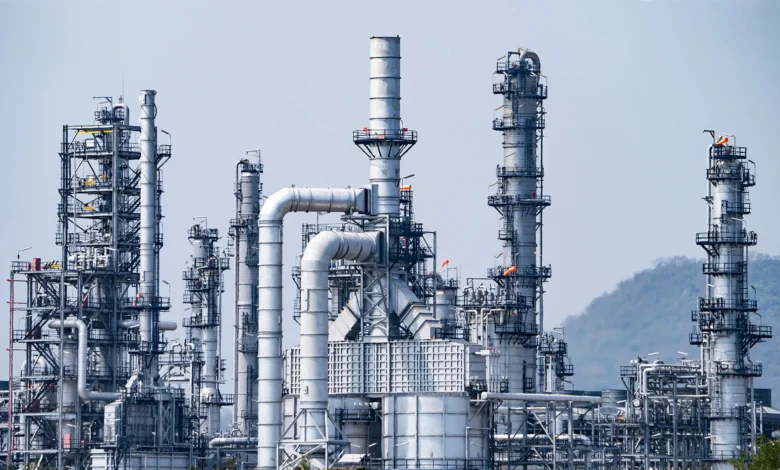
Modern process manufacturing operations—encompassing petrochemical complexes, continuous chemical synthesis facilities, oil refineries, and pharmaceutical bulk plants—run on unforgiving operational rhythms. Unlike discrete assembly manufacturing where an unexpected mechanical halt simply stops an isolated station, a sudden shutdown in continuous process manufacturing carries severe compounding consequences. Thermal shocks can damage reactor refractory linings, intermediate chemicals can solidify inside piping networks, flaring spikes greenhouse gas output, and restarting complex equilibrium reactions often demands days of lost production.
Historically, plant managers balanced between two imperfect philosophies: reactive maintenance, which repairs components only after catastrophic failure, and calendar-based preventive maintenance, which services equipment at static operating intervals regardless of real mechanical condition. While preventive schedules reduce sudden failures, they trigger substantial downtime, high labor expenditures, and the needless replacement of healthy mechanical assets. Predictive maintenance offers a fundamentally different operating logic. By merging continuous sensor instrumentation, edge analytics, industrial physics models, and predictive algorithms, modern process plants detect micro-level mechanical and thermodynamic degradation long before functional failure occurs.
Foundational Prerequisites and Asset Criticality Assessment
Rushing into predictive maintenance without disciplined scoping is one of the most common operational pitfalls. Equipping every valve, motor, and heat exchanger across a massive facility with high-frequency telemetry generates an unmanageable flood of telemetry while draining engineering budgets. Successful programs begin with rigorous asset categorization.
Failure Mode and Effects Analysis
Before mounting the first sensor, reliability engineering teams must conduct comprehensive asset criticality rankings using standardized Failure Mode, Effects, and Criticality Analysis methodologies. Assets generally fall into distinct categories across process environments:
-
Tier One High Criticality Assets: Turbocompressors, main cracking blowers, boiler feed pumps, continuous crude distillation pumps, and high-pressure extrusion drives. These machines possess no built-in operational redundancy; their unplanned shutdown instantly halts plant throughput or presents acute safety and environmental risks.
-
Tier Two Moderate Criticality Assets: Dual-train spared centrifugal pumps, localized agitation mixers, cooling tower induced-draft fans, and cross-flow heat exchangers. If one unit fails, the operational train can continue running temporarily via bypass lines or redundant spares, though capacity margins shrink.
-
Tier Three Balance of Plant Assets: Sump pumps, utility air compressors, potable water systems, and intermittent transfer lines. These machines present negligible process impact upon failure, making reactive or basic visual inspection strategies far more economical than real-time algorithmic tracking.
Establishing Mechanical Baselines and Digital Lineage
Predictive analytics cannot reliably evaluate an asset without historical performance context. Engineering teams must compile comprehensive historical data for all Tier One and Tier Two machinery. This baseline dossier includes original equipment manufacturer operating curves, historical work orders, bearing runout measurements, lubricating oil brand chemistry, vibration acceptance tests recorded during original commissioning, and documented mean time between failures. Clean historical reference points give anomaly detection algorithms a stable baseline against which subtle drift becomes immediately discernible.
Instrumentation Architecture and Sensor Modalities
Continuous monitoring requires capturing multiple physical domains. Process machinery rarely fails through a single isolated mechanical mechanism; structural, electrical, and thermodynamic degradation occur in parallel.
Vibration Analysis and Structural Dynamics
Vibration profiling remains the core sensory pillar for heavy rotating assets. Accelerometers, velocity pickups, and non-contact eddy-current proximity probes capture minute shaft deflections and casing stress.
-
High-Frequency Accelerometry: Piezoelectric sensors capture stress waves generated by microscopic micro-spalling or subsurface micro-cracks on inner and outer bearing raceways long before heat builds up.
-
Spectral Fast Fourier Transform Analytics: Transforming raw time-domain vibration signatures into distinct frequency spectra pinpoints mechanical flaws with surgical precision. Specific frequency peaks reveal mechanical imbalance, shaft misalignment, soft-foot conditions, vane-pass flow disturbances, and gear mesh clearance degradation.
-
Proximity Probes on Fluid-Film Bearings: On massive steam turbine rotors and horizontal centrifugal compressors, oil-whirl and rotor unbalance transmit weakly to outer casings. Non-contact eddy-current probes measure direct dynamic shaft displacement relative to white-metal babbitt journal bearings.
Tribology and Inline Lubrication Telemetry
Lubricating oil acts as the lifeblood of industrial machinery, conveying clear physical evidence of ongoing mechanical wear.
-
Ferrous Debris Particle Counters: Inductive coil sensors installed in recirculation lines count and size microscopic ferrous wear debris, revealing early internal component abrasion.
-
Dielectric and Viscosity Monitoring: Inline sensors continuously monitor lubricant viscosity, dielectric breakdown, and moisture contamination caused by steam gland leakage or cooling jacket failure.
-
Laboratory Spectrometry Integration: Physical online sensors work in tandem with scheduled laboratory ferrography and acid number testing to detect anti-wear additive depletion and soot buildup.
Thermodynamic and Process Variable Integration
In process facilities, mechanical deterioration directly shifts thermodynamic parameters. Tracking mechanical indicators in complete isolation from process chemistry produces false alarms.
-
Thermal Profiling: Infrared thermography arrays and resistance temperature detectors map bearing housing hotspots, electrical contact resistance in motor control centers, and deteriorating refractory linings inside fired heaters.
-
Differential Pressure and Volumetric Flow: Measuring pressure drops across filters, strainers, and catalytic catalyst beds detects premature fouling, internal coking, and pump cavitation patterns caused by net positive suction head shortages.
-
Motor Current Signature Analysis: Current transformers installed within motor switchgear measure subtle perturbations in the stator current waveform. Variations in electromagnetic flux reveal broken rotor bars, air gap eccentricities, stator winding insulation degradation, and downstream load fluctuations without requiring direct mechanical contact with the rotating shaft.
Industrial Data Architecture and Edge-to-Cloud Integration
Transforming raw field signals into actionable maintenance directives demands a resilient, low-latency data architecture engineered specifically for harsh industrial communication networks.
Edge Preprocessing and Signal Conditioning
High-speed dynamic signals like vibration waveforms generate tens of thousands of samples per second per sensor channel. Streaming this massive, raw telemetry directly to central cloud platforms rapidly overwhelms plant network bandwidth and racks up unsustainable data transfer and storage costs. Industrial edge computers, mounted inside localized control enclosures, solve this bottleneck by performing local signal conditioning. These edge processors convert raw time-waveform data into statistical time-series aggregates—such as root-mean-square acceleration, peak velocity, kurtosis, and crest factor—streaming only prioritized anomalies and calculated metrics across the plant network.
Bridging Operational Technology and Enterprise Information Systems
Process plants operate inside rigid, multi-layered security environments modeled on the Purdue Enterprise Reference Architecture. Sensor communications must respect these secure network layers:
-
Field Network Security: Sensor nodes communicate locally via wired protocols like Highway Addressable Remote Transducer, Modbus TCP, and PROFIBUS, or robust industrial mesh networks like WirelessHART.
-
Industrial Internet of Things Gateways: Hardened edge gateways securely marshal data across demilitarized zones using lightweight, publish-subscribe protocols such as Message Queuing Telemetry Transport running over Transport Layer Security.
-
Time-Series Historians and Cloud Lakes: Cleaned telemetry lands in operational historians and scalable object storage repositories, where data points are aligned against standardized timestamps and matched with operational context from distributed control systems.
Diagnostic Algorithms, Machine Learning, and Hybrid Physics Models
Pure data-driven machine learning models often struggle in process plants because catastrophic mechanical failures happen infrequently. An algorithm trained purely on standard operating data rarely possesses adequate training examples of rare, complex failure cascades. Modern predictive platforms overcome this limitation by deploying hybrid digital twins that blend mechanical engineering physics with statistical machine learning.
Physics-Informed Digital Twins
Thermodynamic and kinematic equations define the exact theoretical operating parameters of compressors, pumps, and heat transfer networks. When an algorithm knows the molecular weight, suction pressure, temperature, and rotational speed of a continuous gas stream, it can calculate the exact theoretical discharge pressure and motor torque required. If real operating parameters diverge from these first-principle physics models, the system flags degradation instantly, distinguishing between mechanical component wear and intentional process throughput changes orchestrated by human board operators.
Machine Learning for Anomaly Detection
Statistical and deep learning models operate alongside physics equations to spot subtle operational anomalies hidden within complex, multivariate data streams.
-
Autoencoders and Unsupervised Learning: Neural networks learn the complex mathematical relationships between dozens of process variables during steady-state production. When unnoticed mechanical binding or valve leakage alters these multidimensional relationships, reconstruction errors spike, triggering an early warning.
-
Remaining Useful Life Estimation: Once an active failure mode is identified, survival analysis models and degradation trend algorithms calculate the exact time remaining before the component reaches critical functional failure thresholds. This calculation gives operations teams the concrete lead time needed to order replacement parts, stage specialized maintenance contractors, and plan a controlled unit shutdown.
Overcoming Cultural and Operational Implementation Hurdles
The most sophisticated predictive algorithms deliver zero return on investment if plant operations, reliability engineering, and maintenance crews fail to act on the resulting diagnostic insights.
-
Breaking Operational Silos: In many legacy process plants, operations managers focus entirely on instantaneous hourly production throughput, while maintenance managers focus on wrench-time efficiency and repair budgets. Predictive maintenance unites these two groups under shared asset health key performance indicators.
-
Automated Work Order Generation: Diagnostic alerts should never languish inside a secondary software dashboard that technicians rarely open. Modern implementations connect predictive analytics engines directly to Computerized Maintenance Management Systems and Enterprise Asset Management platforms. When an algorithm detects an impending mechanical seal failure, it automatically generates a preliminary work order, reserves the correct replacement seal kit from warehouse inventory, and assigns an inspection task to the mechanical reliability technician.
-
Upskilling the Industrial Workforce: Transitioning from calendar-based work orders to data-driven, condition-directed repairs requires continuous workforce education. Millwrights, electricians, and instrumentation specialists must be trained to interpret vibration waterfall spectra, acoustic ultrasound measurements, and algorithmic confidence metrics alongside conventional physical hand tools.
Stepwise Deployment Framework for Maximum Operational Value
Process manufacturing leaders achieve the highest success rates by deploying predictive programs through an iterative, staged rollout rather than an all-at-once transformation.
-
Stage One Target Demonstration: Select five to ten critical machines that have caused recurring operational bottlenecks or unexpected plant downtime over the past three operating years. Equip this equipment with a complete sensor array, establish baseline digital twins, and prove measurable financial return on investment by successfully detecting and mitigating an active failure mechanism.
-
Stage Two Horizontal Scaling: Expand the sensor array, industrial edge infrastructure, and predictive models across all remaining Tier One rotating assets and unspared processing machinery throughout the operating train.
-
Stage Three Enterprise-Wide Autonomous Optimization: Link plant-level predictive health metrics into higher-level enterprise supply chain planning software. If a critical synthesis pump exhibits progressive impeller cavitation, enterprise software automatically throttles downstream manufacturing schedules, coordinates dynamic feedstock delivery rerouting, and schedules emergency maintenance during the next scheduled plant slowdown.
Frequently Asked Questions
How does process variable noise impact predictive maintenance algorithm accuracy?
Process plants frequently experience rapid operational swings due to grade changes, feedstock composition variations, ambient weather swings, and planned throughput adjustments. If predictive algorithms evaluate vibration or temperature data without correlating those spikes against operating throughput, discharge pressure, and motor load, the system generates high volumes of false-positive alarms that frustrate maintenance technicians.
Why are acoustic ultrasound sensors uniquely effective for slow-speed rotating machinery?
Slow-speed assets, such as large rotary kiln drive rollers, fluid thickener rakes, and crystallization agitators rotating below one hundred revolutions per minute, generate very low mechanical vibration energy that standard accelerometers struggle to differentiate from ambient structural background noise. Acoustic ultrasound sensors detect the microscopic, high-frequency friction stress waves generated when damaged roller bearings pass over microscopic raceway cracks, regardless of low rotational velocity.
What cybersecurity considerations emerge when connecting process machinery to predictive analytics platforms?
Connecting previously isolated field sensors to modern predictive computing platforms introduces potential digital attack vectors into industrial control environments. Facilities must deploy unidirectional data diodes or strictly configured demilitarized zones that permit data to travel outward from operational networks to predictive analytics platforms while physically preventing inbound control commands from traversing back into safety-instrumented networks.
Can predictive maintenance systems function effectively in hazardous process environments?
Yes, but field instrumentation deployed in chemical plants, fuel terminals, and refineries must meet strict intrinsic safety standards such as ATEX and Class 1, Division 1 or Division 2 certifications. Sensor casings, wiring conduits, and edge computing enclosures must be engineered to prevent electrical arcs or hot surface temperatures that could otherwise ignite volatile hydrocarbon vapors or combustible airborne dust.
How does predictive maintenance differ when monitoring static process equipment versus rotating machinery?
Rotating machinery monitoring focuses primarily on dynamic high-frequency time-series data like vibration, acoustic emissions, and motor current flux to capture kinetic wear. Static assets, including pressure vessels, heat exchanger tubes, and transfer piping networks, demand condition monitoring focused on structural thinning, internal scaling, and chemical corrosion, tracked via pulsed eddy current, phased-array ultrasound thickness gauges, acoustic emission leak detection, and radiography.
What specific operational key performance indicators best measure the success of a predictive maintenance rollout?
Facilities evaluate program effectiveness by tracking reductions in overall maintenance overtime hours, decreases in reactive emergency work orders relative to planned proactive work orders, drops in mean time to repair, improvements in overall equipment effectiveness, and reductions in spare parts warehouse holding costs resulting from targeted, just-in-time component purchasing.